North Carolina lightning map
North Carolina sees frequent warm-season thunderstorms, with mountain convection in the west and humid, sea-breeze-driven storms toward the coast.
Checking…
Detected from NOAA GOES-19 GLM satellite data. Aggregate count for North Carolina — your exact location and alerts live in the app.
About lightning in North Carolina
North Carolina runs from the Appalachians to the Atlantic, and its lightning reflects that range — mountain afternoon storms, Piedmont frontal systems, and coastal sea-breeze and tropical activity. The active window runs May through September. Storms here often build fast and strike from their leading edge. The live distance and trend to the nearest flash give you more warning than a statewide average ever could.
- Thunderstorm days/yr
- 45
- US rank
- #18 of 50
- Peak season
- May–September
State thunderstorm-day normals are provisional (NOAA/NWS); per-city climate data is shown where a station normal is published.
Cities in North Carolina
Lightning safety in North Carolina
The safest call in North Carolinaisn’t how many storm days it averages a year — it’s how close the nearest strike is right now. Keep to the 30-30 rule: indoors within 30 seconds of thunder, back outside only 30 minutes after the last. StrikeCast shows that live distance and whether the storm is closing in, so you can move early.
StrikeCast app
Distance, trend & alerts — in your pocket.
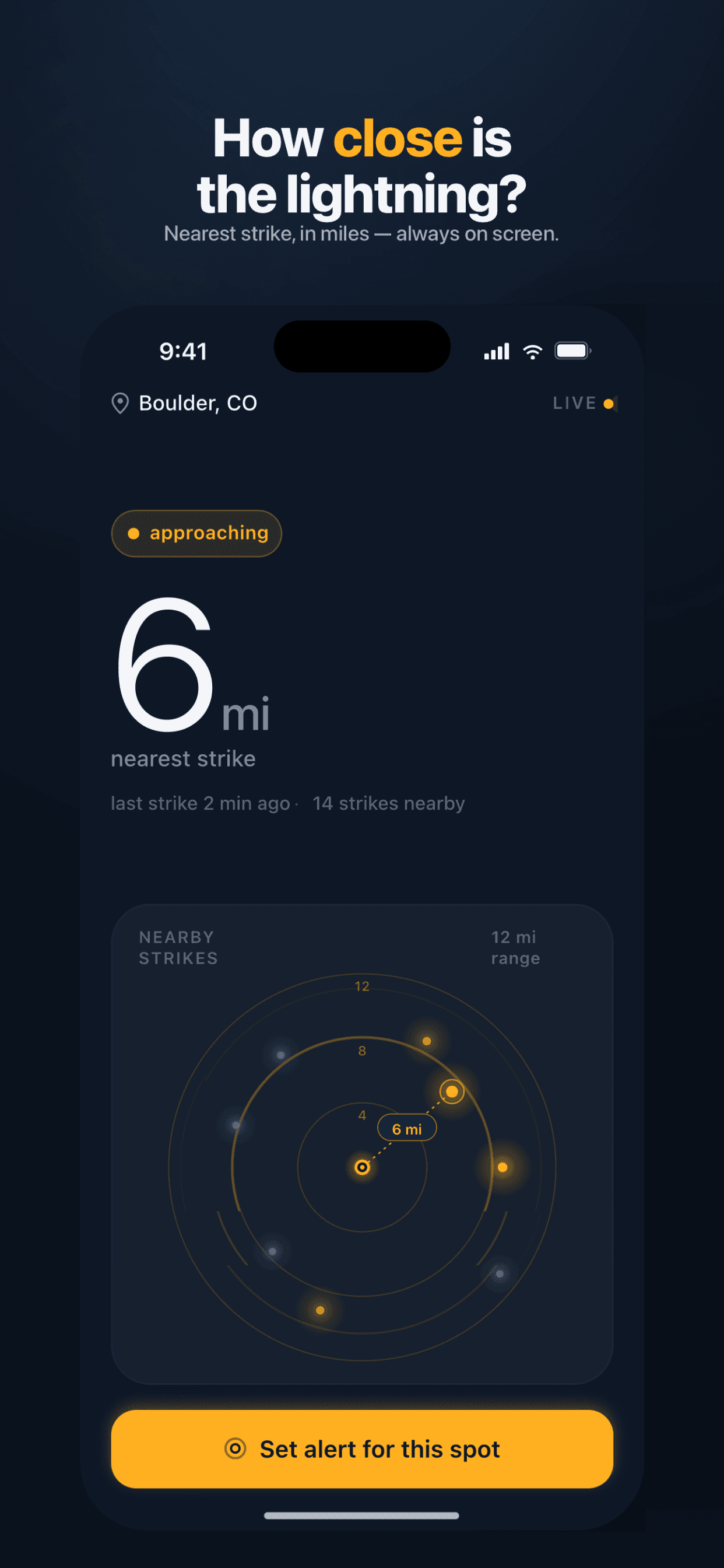
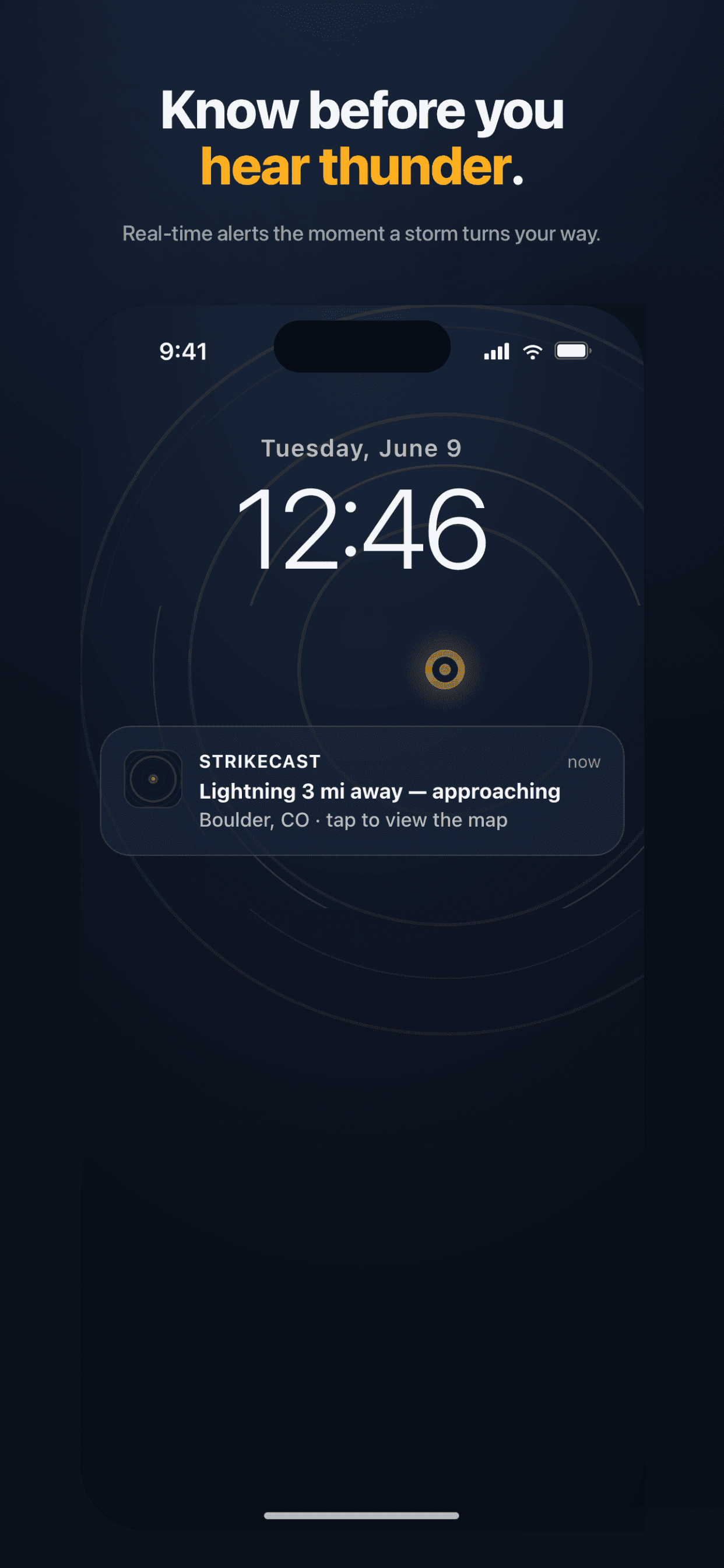
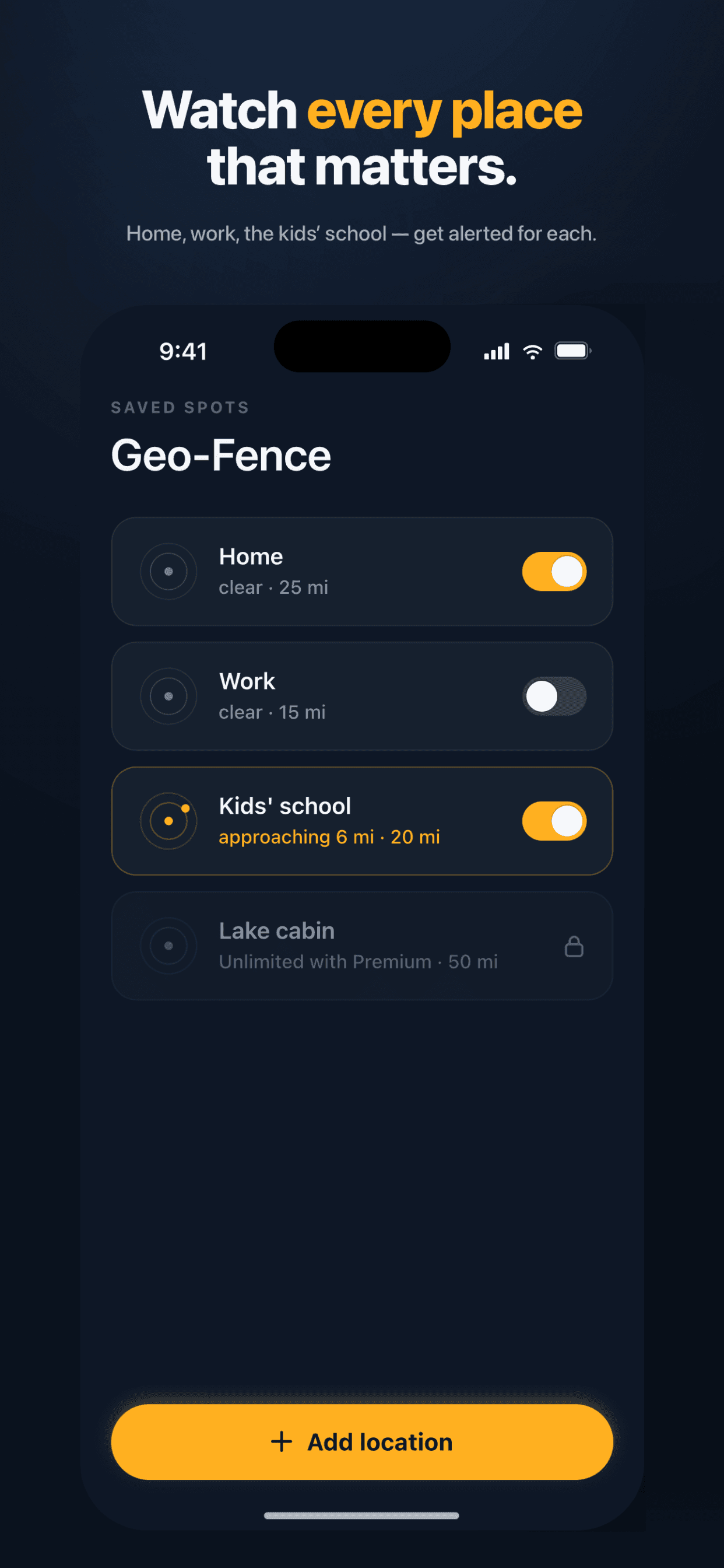
GPS-precise distance to the nearest strike, live approaching/moving-away trend, and push alerts for every place that matters across North Carolina — home, work, the kids' school.
Your exact location stays on your device. Never shared. Never tracked.
Lightning guides
Frequently asked
How many thunderstorm days does North Carolina get?
North Carolina averages about 45 thunderstorm days a year, versus a US average near 25 — roughly 1.8× the national norm. Activity peaks May–September.
Where does North Carolina rank for lightning in the US?
By mean annual thunderstorm days, North Carolina ranks #18 of 50 states. Rankings use NOAA/NWS climate normals; the live distance and trend on this page come from NOAA GOES-19 satellite data.
When is thunderstorm season in North Carolina?
Lightning is most frequent May–September in North Carolina.
How does StrikeCast track lightning in North Carolina?
StrikeCast reads NOAA GOES-19 GLM (Geostationary Lightning Mapper) satellite data, updated continuously, to show how far away the nearest strike is and whether it is approaching or moving away. Save any place in North Carolina in the free app to get a push alert when lightning closes in.