Italy lightning map
Northern Italy's Po Valley is one of Europe's lightning capitals; the south and coasts add intense autumn Mediterranean storms.
Checking…
Detected from EUMETSAT MTG-LI satellite data. Aggregate count for Italy — your exact location and alerts live in the app.
About lightning in Italy
Italy runs two storm regimes. The northern Po Valley around Milan and Bologna is among the most lightning-active regions in Europe, firing frequent summer afternoon thunderstorms as Alpine and Mediterranean air collide. Further south, Rome, Naples and the coasts see their most violent storms in autumn, when warm seas feed intense Mediterranean systems. Because these storms build fast and strike ahead of the rain, the live distance to the nearest flash and whether it is closing in are what keep you safe.
- Peak season
- May–September
- Region
- Europe
Cities in Italy
Lightning safety in Italy
When storms build across Italy, the distance to the nearest strike matters more than a country-wide count. Follow the 30-30 rule: if thunder follows lightning by 30 seconds or less, get indoors, and wait 30 minutes after the last thunder before heading back out. StrikeCast surfaces the live distance and trend so you can act before the storm reaches you.
StrikeCast app
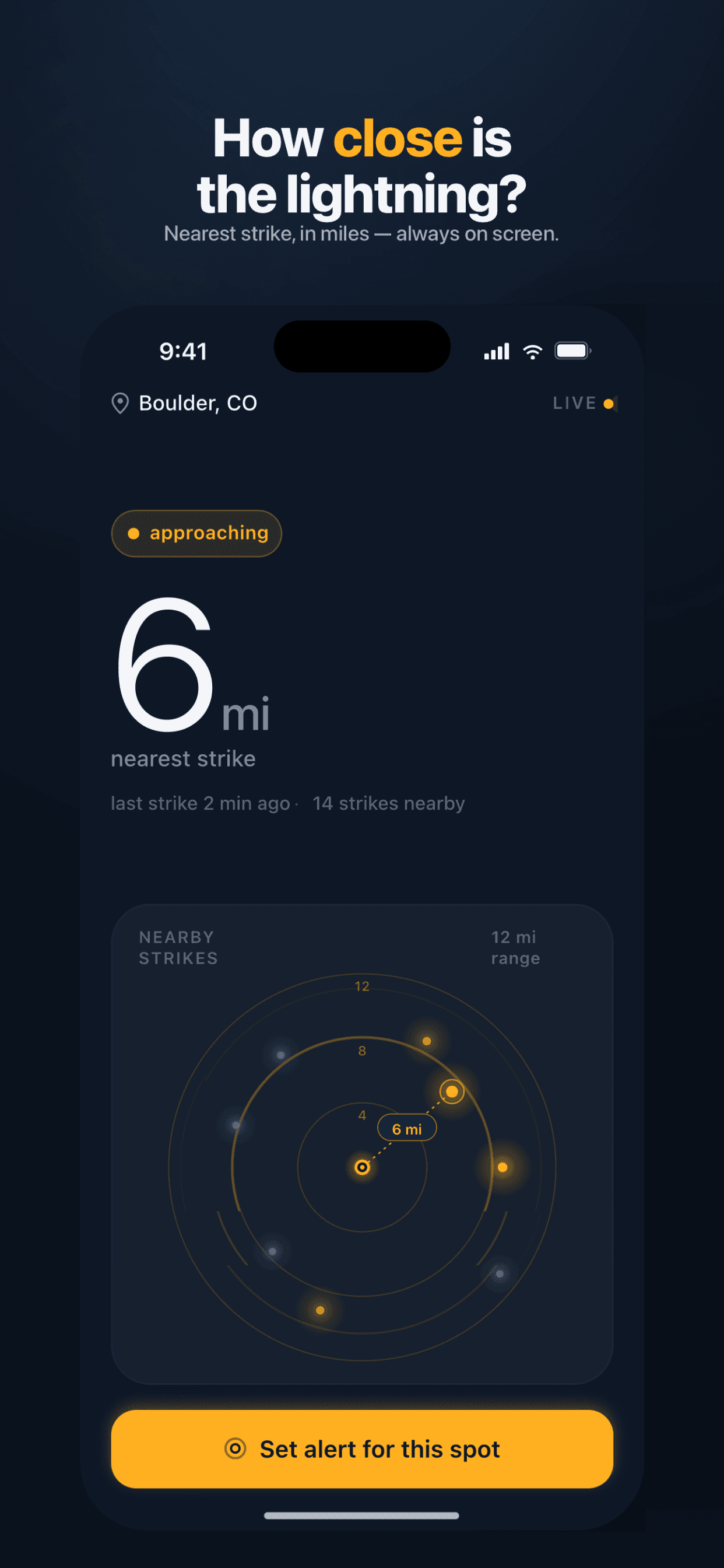
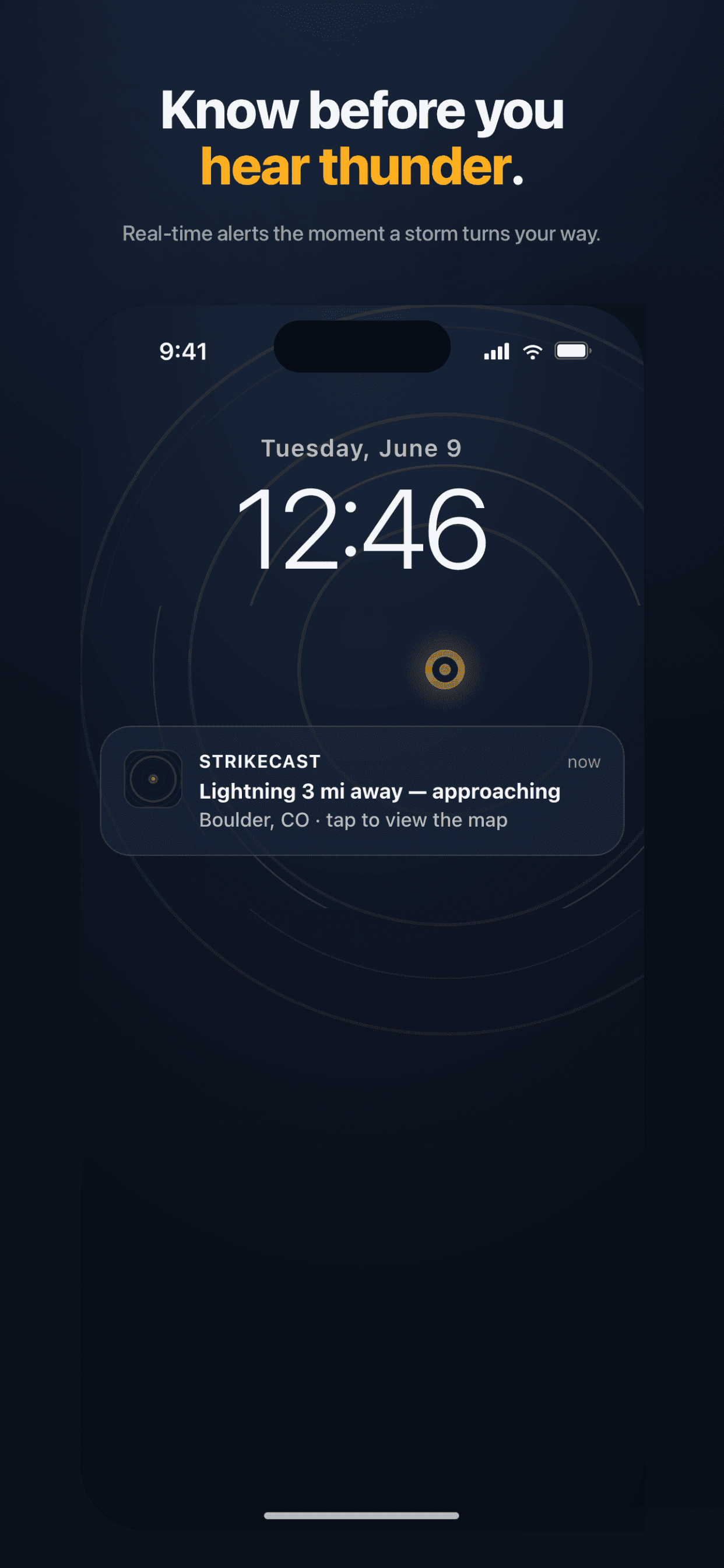
Distance, trend & alerts — in your pocket.
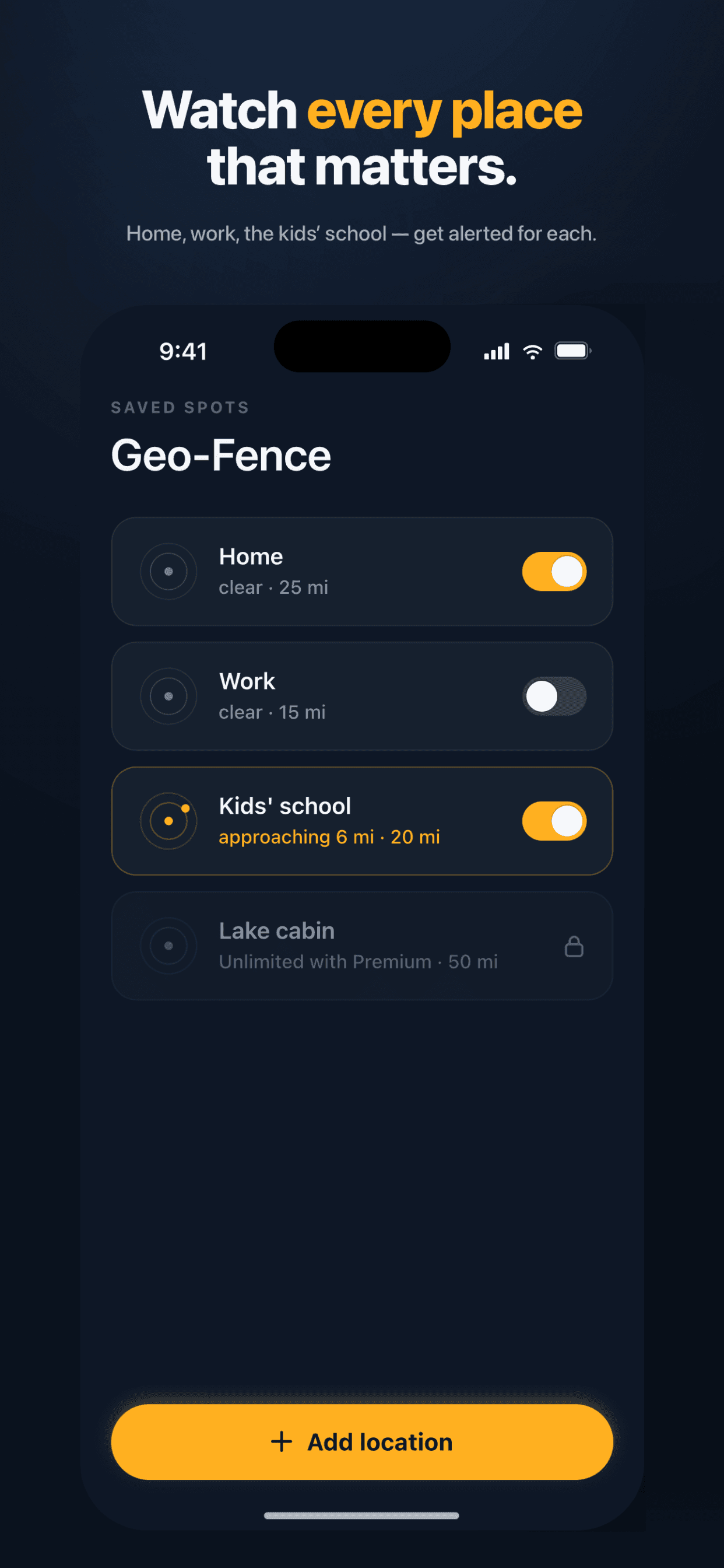
GPS-precise distance to the nearest strike, live approaching/moving-away trend, and push alerts for every place that matters across Italy — home, work, the kids' school.
Your exact location stays on your device. Never shared. Never tracked.
Frequently asked
How does StrikeCast track lightning in Italy?
StrikeCast reads EUMETSAT MTG-LI satellite data, updated continuously, to show how far away the nearest strike is and whether it is approaching or moving away. Save any city in Italy in the free app to get a push alert when lightning closes in.
When is thunderstorm season in Italy?
Lightning is most frequent May–September in Italy.
Is it safe to be outside during a thunderstorm in Italy?
If you can hear thunder, you are close enough to be struck. Follow the 30-30 rule: shelter when thunder follows lightning by 30 seconds or less, and wait 30 minutes after the last thunder. StrikeCast's live distance and trend help you decide before the storm arrives.