Ethiopia lightning map
Ethiopia's highlands storm intensely through the summer kiremt rains, with frequent afternoon lightning over Addis Ababa.
Checking…
Detected from EUMETSAT MTG-LI satellite data. Aggregate count for Ethiopia — your exact location and alerts live in the app.
About lightning in Ethiopia
Ethiopia's thunderstorms ride the summer kiremt rains. From June to September, moist air driven up over the high central plateau fires near-daily afternoon and evening storms around Addis Ababa and across the highlands, with a secondary wet spell in spring. The steep terrain builds storms fast and can hide them until they are close, so the live distance to the nearest flash and its trend are the clearest warning — better than thunder rolling across the mountains.
- Peak season
- June–September
- Region
- Africa
Cities in Ethiopia
Lightning safety in Ethiopia
When storms build across Ethiopia, the distance to the nearest strike matters more than a country-wide count. Follow the 30-30 rule: if thunder follows lightning by 30 seconds or less, get indoors, and wait 30 minutes after the last thunder before heading back out. StrikeCast surfaces the live distance and trend so you can act before the storm reaches you.
StrikeCast app
Distance, trend & alerts — in your pocket.
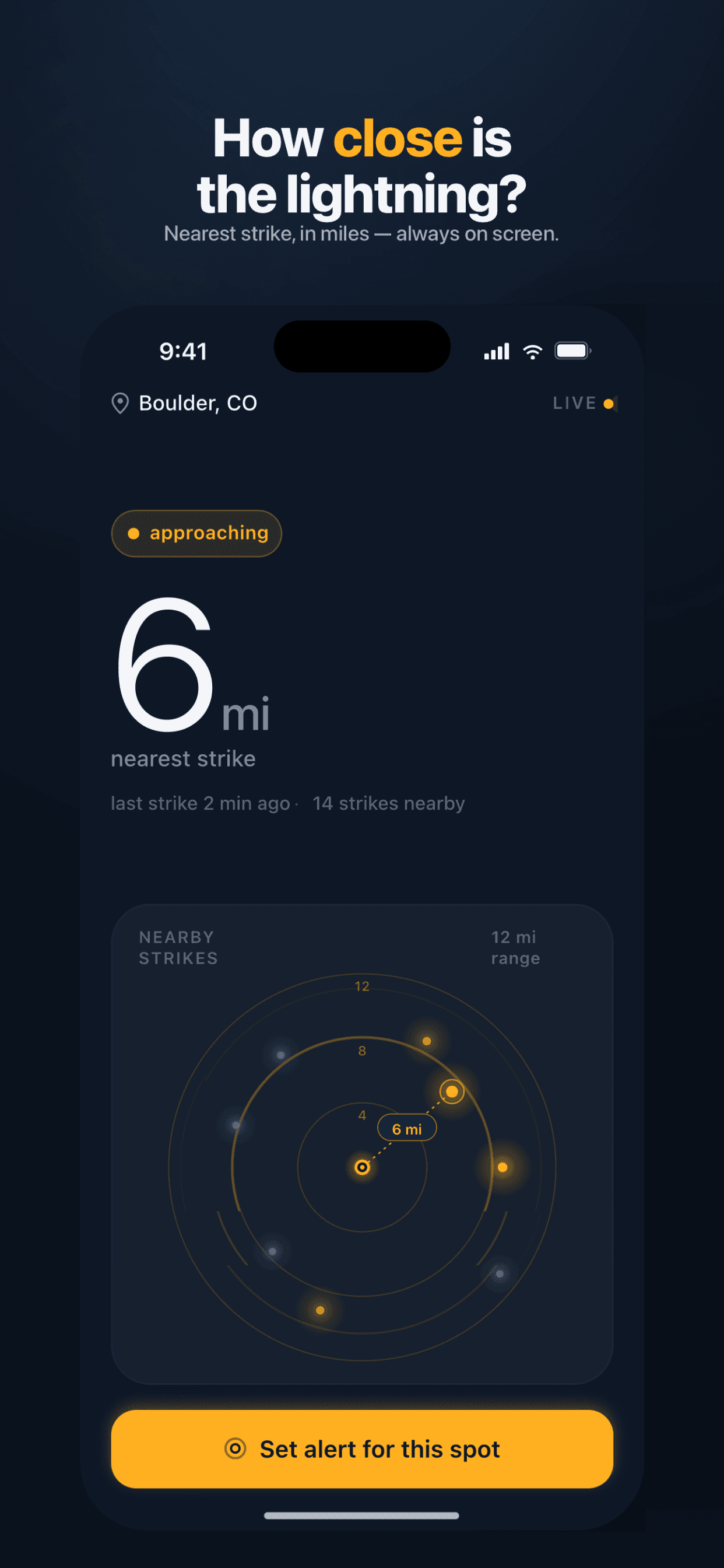
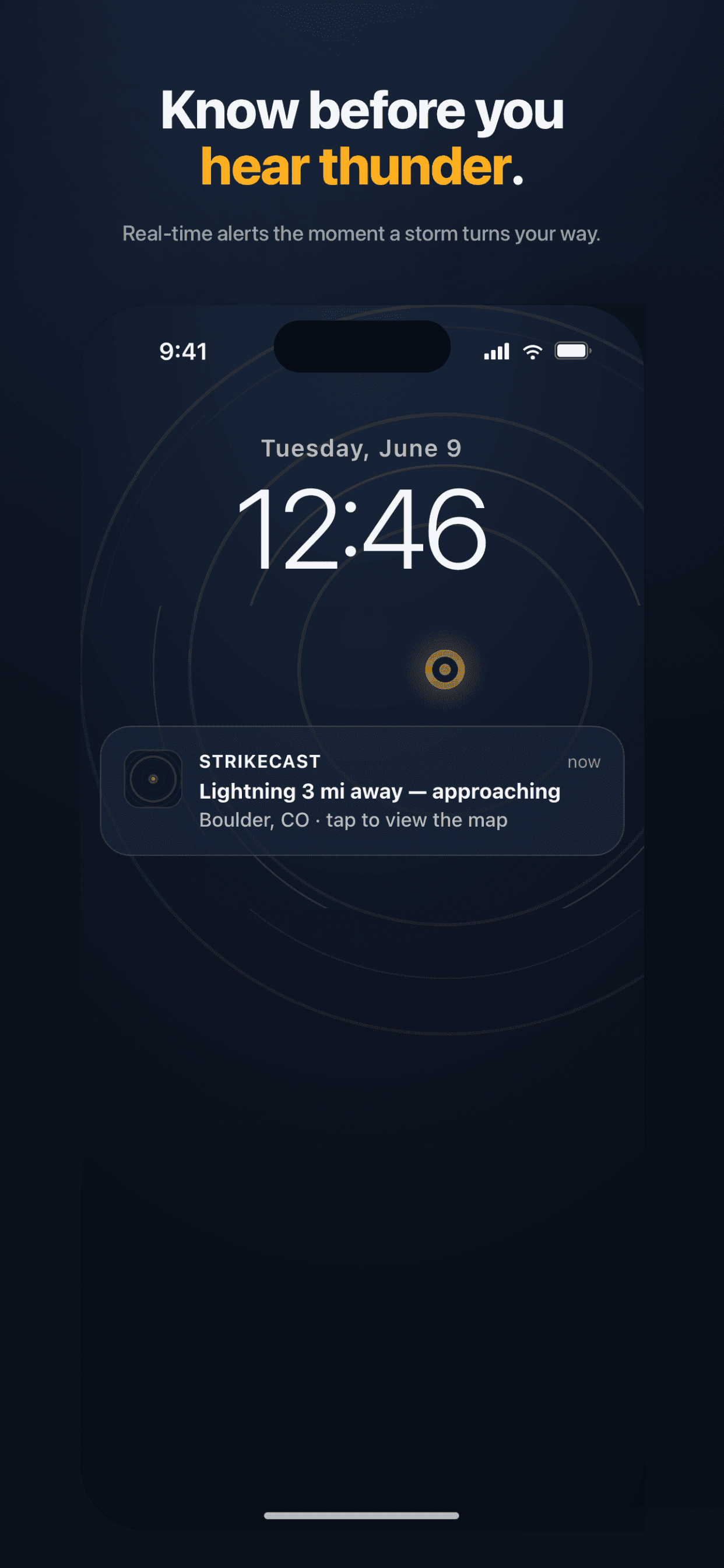
GPS-precise distance to the nearest strike, live approaching/moving-away trend, and push alerts for every place that matters across Ethiopia — home, work, the kids' school.

Your exact location stays on your device. Never shared. Never tracked.
Frequently asked
How does StrikeCast track lightning in Ethiopia?
StrikeCast reads EUMETSAT MTG-LI satellite data, updated continuously, to show how far away the nearest strike is and whether it is approaching or moving away. Save any city in Ethiopia in the free app to get a push alert when lightning closes in.
When is thunderstorm season in Ethiopia?
Lightning is most frequent June–September in Ethiopia.
Is it safe to be outside during a thunderstorm in Ethiopia?
If you can hear thunder, you are close enough to be struck. Follow the 30-30 rule: shelter when thunder follows lightning by 30 seconds or less, and wait 30 minutes after the last thunder. StrikeCast's live distance and trend help you decide before the storm arrives.