Connecticut lightning map
Connecticut's thunderstorms cluster in summer afternoons, often along cold fronts and sea-breeze boundaries pushing across southern New England.
Checking…
Detected from NOAA GOES-19 GLM satellite data. Aggregate count for Connecticut — your exact location and alerts live in the app.
About lightning in Connecticut
Connecticut’s thunderstorms cluster in summer afternoons, when cold fronts sweep through southern New England and sea breezes off Long Island Sound sharpen the lift. Storms can develop quickly and move fast across the state’s hills and shoreline. The season runs June through August. With storms arriving on short notice, the live distance and trend to the nearest strike beat relying on the first clap of thunder.
- Thunderstorm days/yr
- 25
- US rank
- #39 of 50
- Peak season
- June–August
State thunderstorm-day normals are provisional (NOAA/NWS); per-city climate data is shown where a station normal is published.
Cities in Connecticut
Lightning safety in Connecticut
Across Connecticut, lightning routinely strikes miles ahead of the rain, so a live nearest-strike distance beats waiting for the downpour. The 30-30 ruleis the baseline: shelter within 30 seconds of thunder, and stay in for 30 minutes after the last rumble. StrikeCast’s distance and approaching or moving-away trend tell you which way a Connecticut storm is heading before it arrives.
StrikeCast app
Distance, trend & alerts — in your pocket.
GPS-precise distance to the nearest strike, live approaching/moving-away trend, and push alerts for every place that matters across Connecticut — home, work, the kids' school.
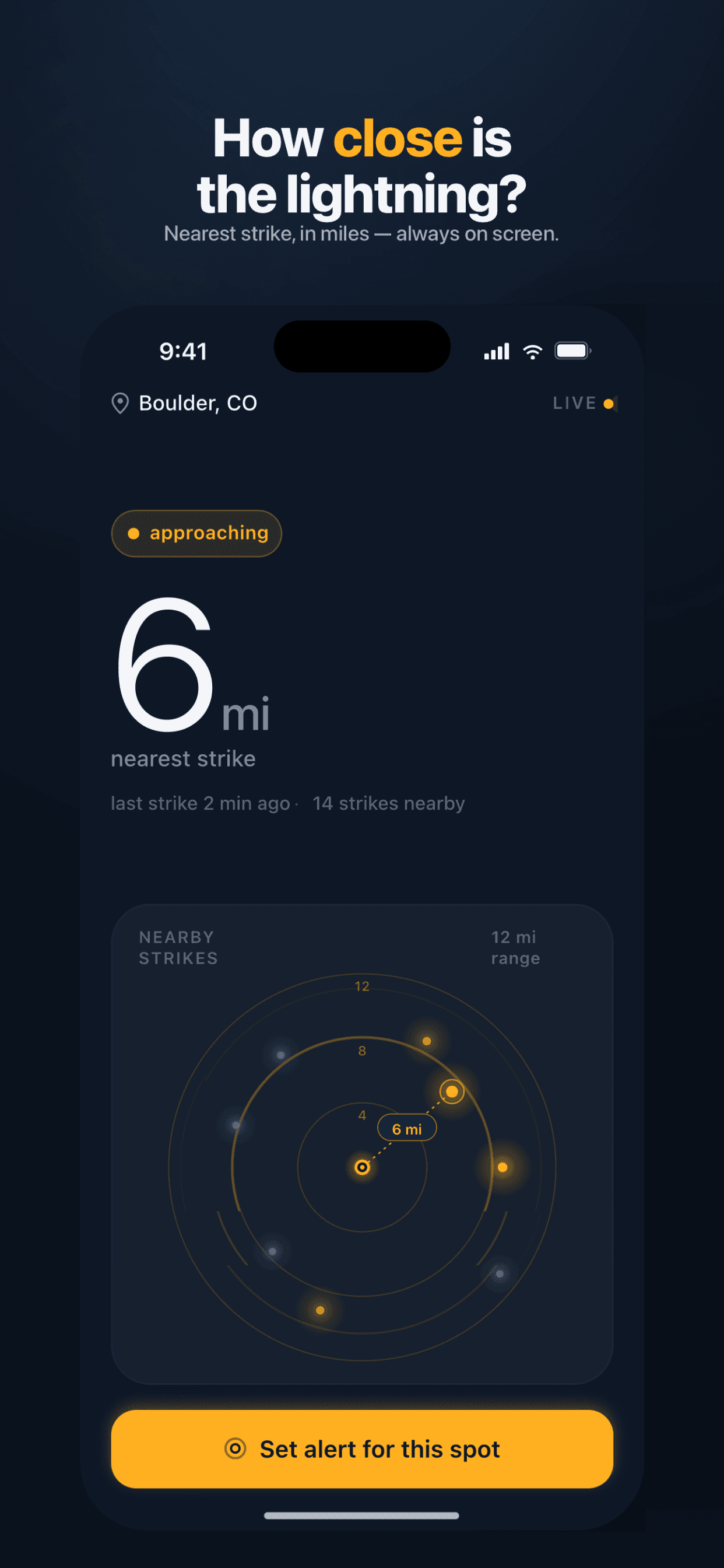
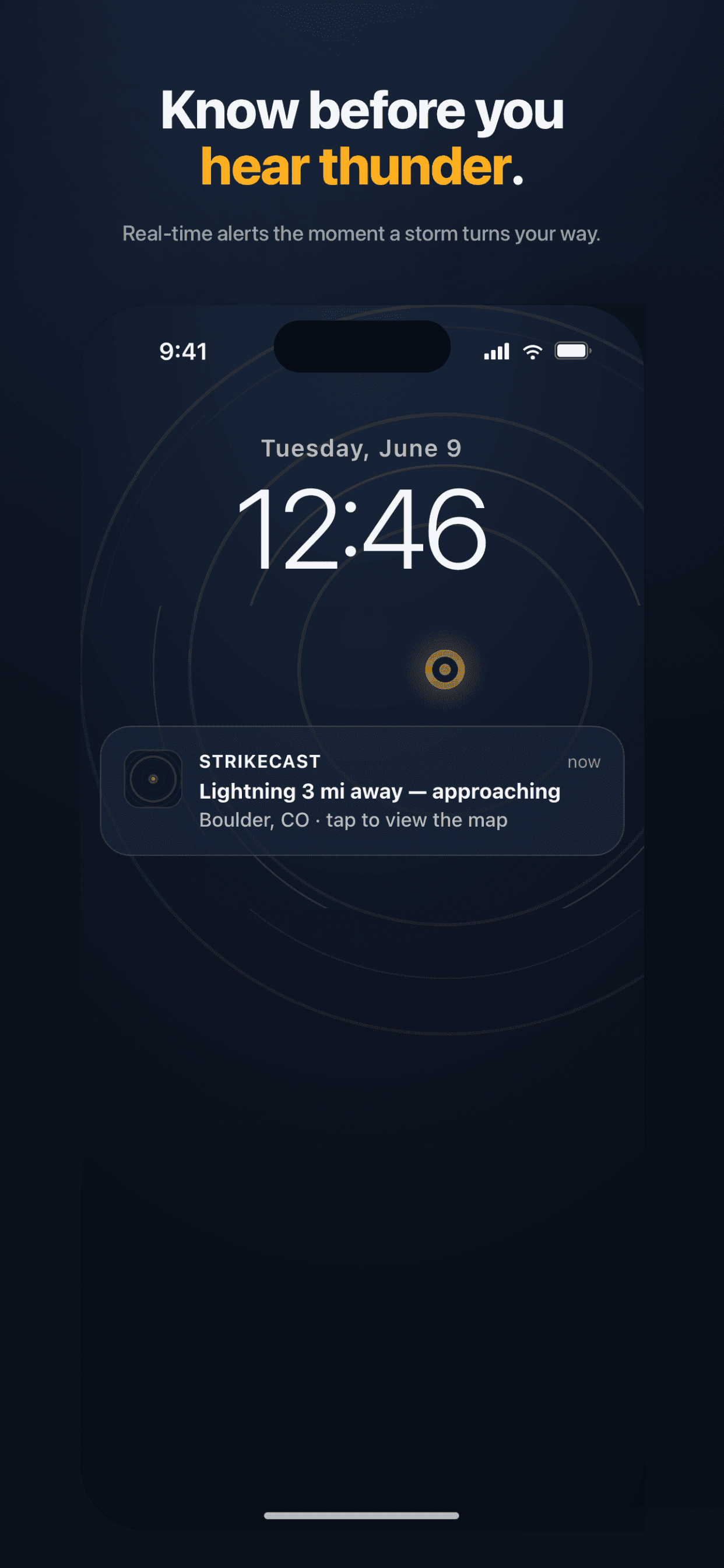
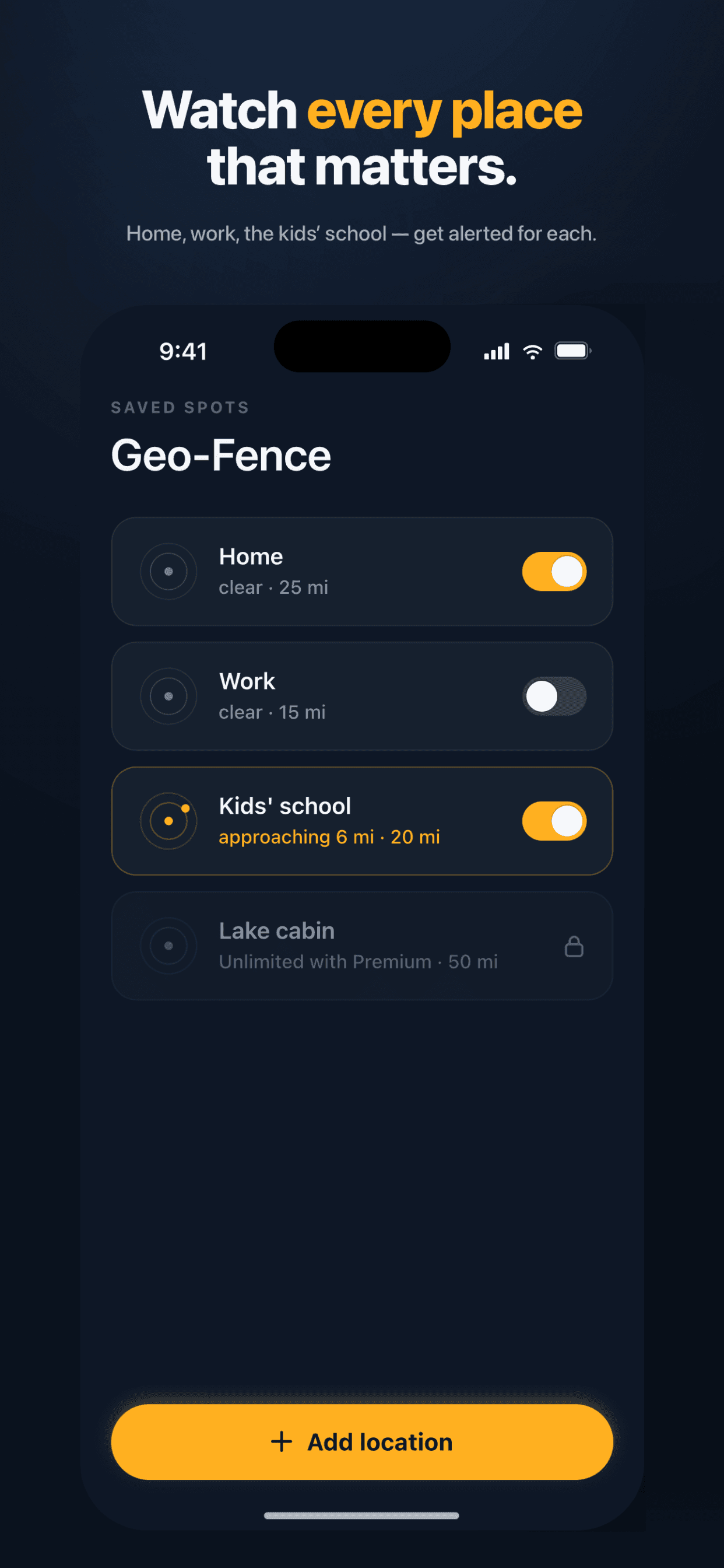
Your exact location stays on your device. Never shared. Never tracked.
Lightning guides
Frequently asked
How many thunderstorm days does Connecticut get?
Connecticut averages about 25 thunderstorm days a year, versus a US average near 25 — roughly 1× the national norm. Activity peaks June–August.
Where does Connecticut rank for lightning in the US?
By mean annual thunderstorm days, Connecticut ranks #39 of 50 states. Rankings use NOAA/NWS climate normals; the live distance and trend on this page come from NOAA GOES-19 satellite data.
When is thunderstorm season in Connecticut?
Lightning is most frequent June–August in Connecticut.
How does StrikeCast track lightning in Connecticut?
StrikeCast reads NOAA GOES-19 GLM (Geostationary Lightning Mapper) satellite data, updated continuously, to show how far away the nearest strike is and whether it is approaching or moving away. Save any place in Connecticut in the free app to get a push alert when lightning closes in.