Is lightning near Longmont right now?
Storm season in Longmont peaks May–August.
Free push alert when lightning approaches Longmont. Your exact location and alerts live in the app.
Thunderstorm season near Longmont
Lightning near Longmont follows Colorado's pattern of about 45 thunderstorm days a year, roughly 1.8× the national average of 25. Lightning near Longmont is most frequent May–August.
- CO thunderstorm days/yr
- 45
- Peak season
- May–August
- vs US average
- 1.8×
- Metro population
- ~98.9K
State-level NOAA climatology; a city-specific thunderstorm-day normal isn’t published for every station.
Where Longmont sits
At about 4,987 ft and roughly 764 mi inland, Longmont's storms are typically heat-driven and quick to develop.
NOAA logged 11 notable lightning events within 50 miles of Longmont since 2015 — including 5 injuries and 2 deaths.
- Elevation
- 4,987 ft
- Distance to coast
- ~764 mi
- Terrain
- Elevated interior
Source: Elevation: open-meteo.com · Coastline: Natural Earth · Lightning history: NOAA NCEI Storm Events.
Lightning safety in Longmont
When thunderstorms build over Longmont, the distance to the nearest strike matters more than a city-wide count. Use the 30-30 rule: if thunder follows lightning by 30 seconds or less, get indoors, and wait 30 minutes after the last thunder before heading back out. StrikeCast surfaces the distance and trend so you can act before the storm reaches you.
StrikeCast app
Distance, trend & alerts — in your pocket.
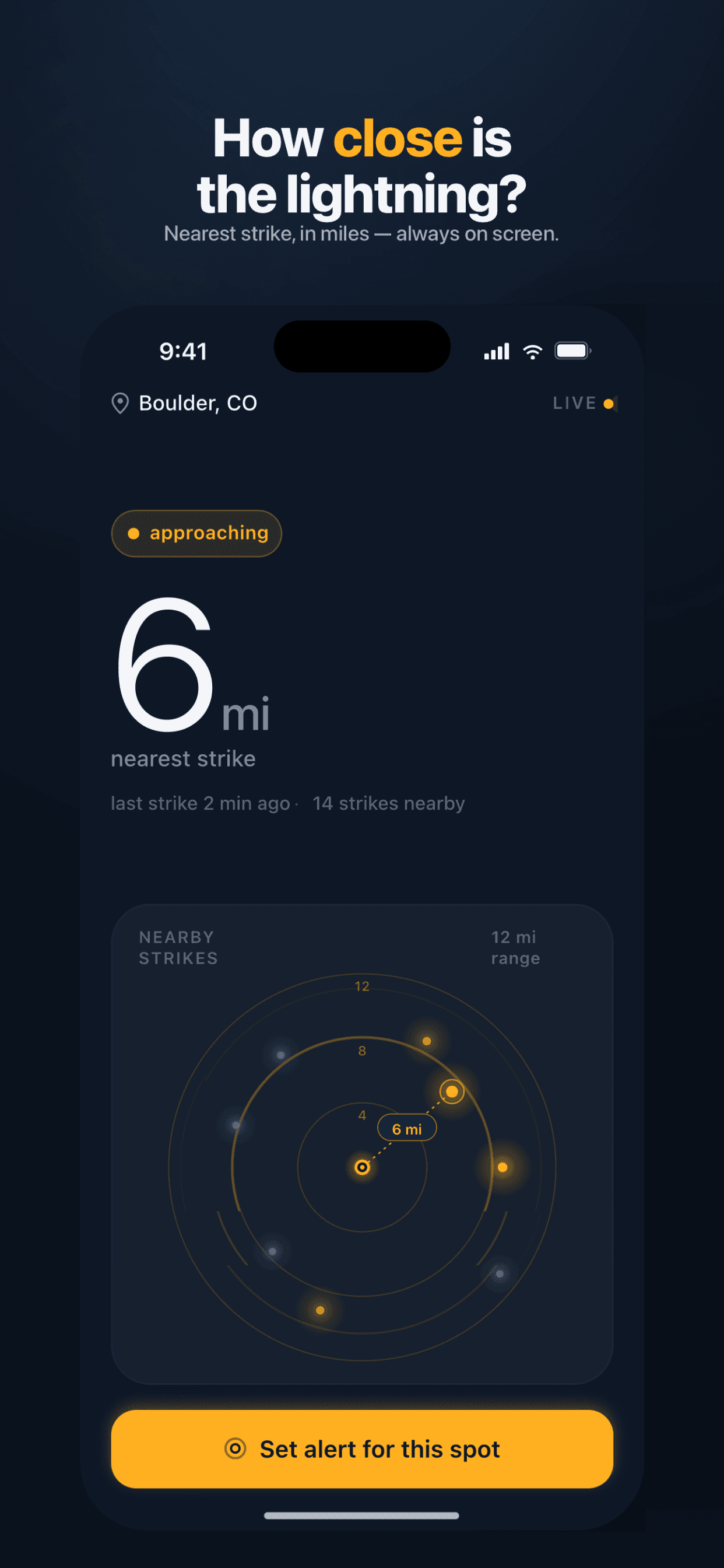
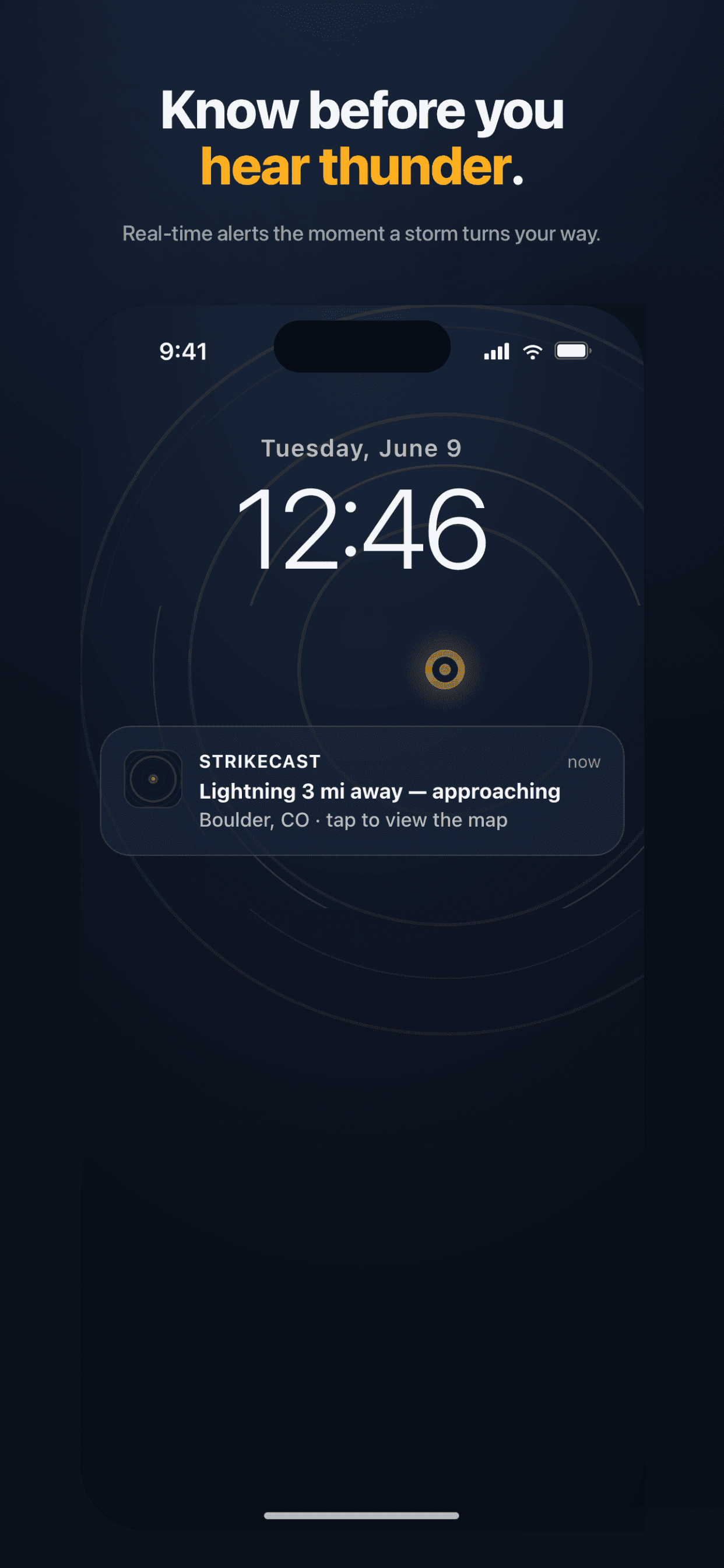
GPS-precise distance to the nearest strike, live approaching/moving-away trend, and a push alert before the storm reaches you — no need to keep the app open.
Your exact location stays on your device. Never shared. Never tracked.
Frequently asked
How far away is the nearest lightning to Longmont?
StrikeCast shows the live distance in miles to the nearest strike near Longmont, updated continuously from NOAA GOES-GLM satellite data, plus whether it is approaching or moving away.
Is it safe to be outside in Longmont right now?
If you can hear thunder, you are close enough to be struck. Follow the 30-30 rule: shelter when thunder follows lightning by 30 seconds or less, and wait 30 minutes after the last thunder. StrikeCast's distance and trend help you decide before the storm arrives.
When is thunderstorm season in Longmont?
Longmont sees the most lightning May–August, the height of the regional storm season.
Can I get lightning alerts for Longmont?
Yes. Get the free StrikeCast app, save Longmont, and you will get a push alert when lightning approaches — no need to keep the app open.